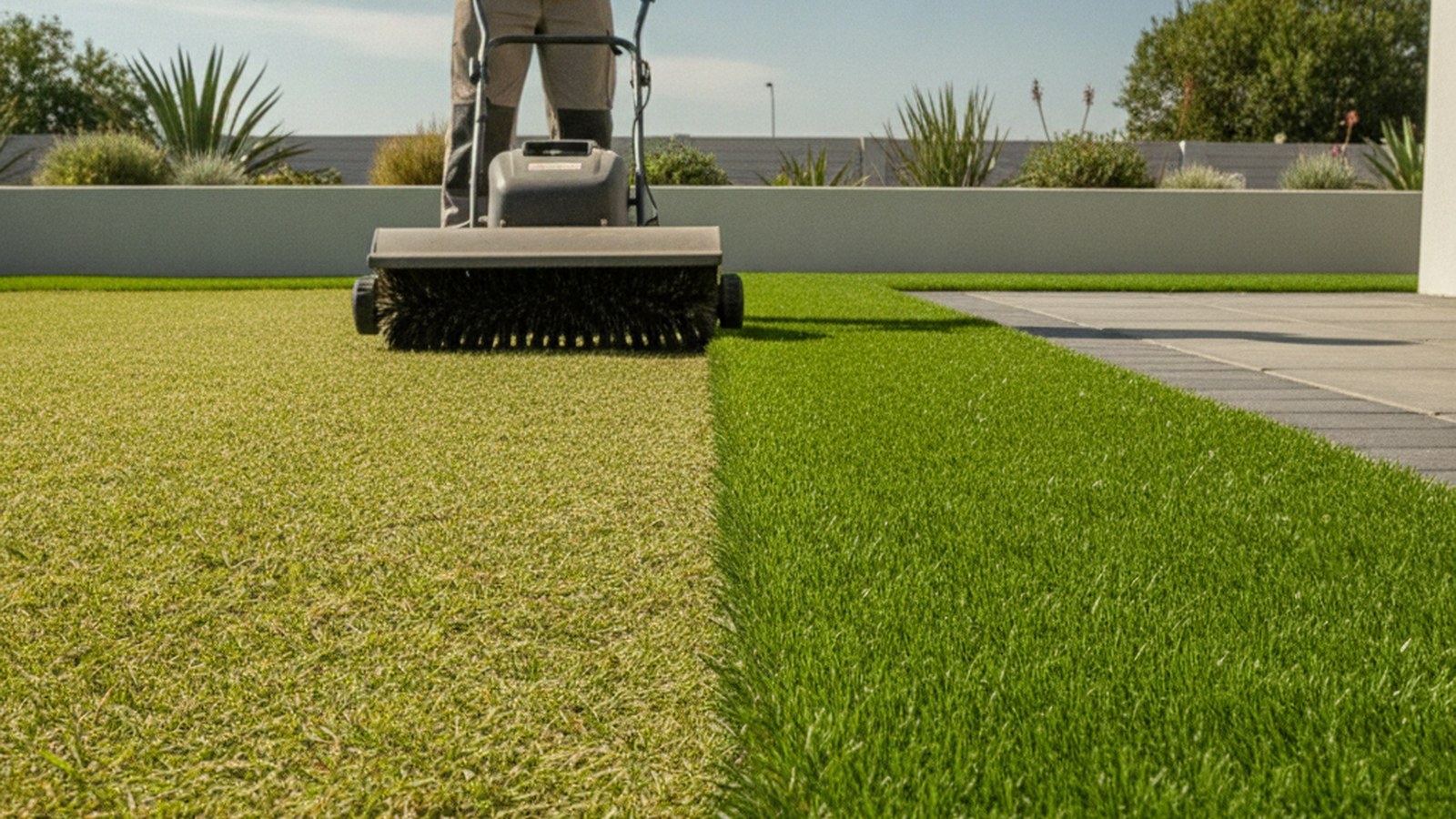
How to lay artificial grass, start to finish
Follow the order below. Each stage depends on the one before it, and the base decides whether the lawn stays flat.
- Strip the old lawn to roughly 75mm.
- Lay crushed stone and compact it in layers.
- Screed a levelling layer flat and compact again.
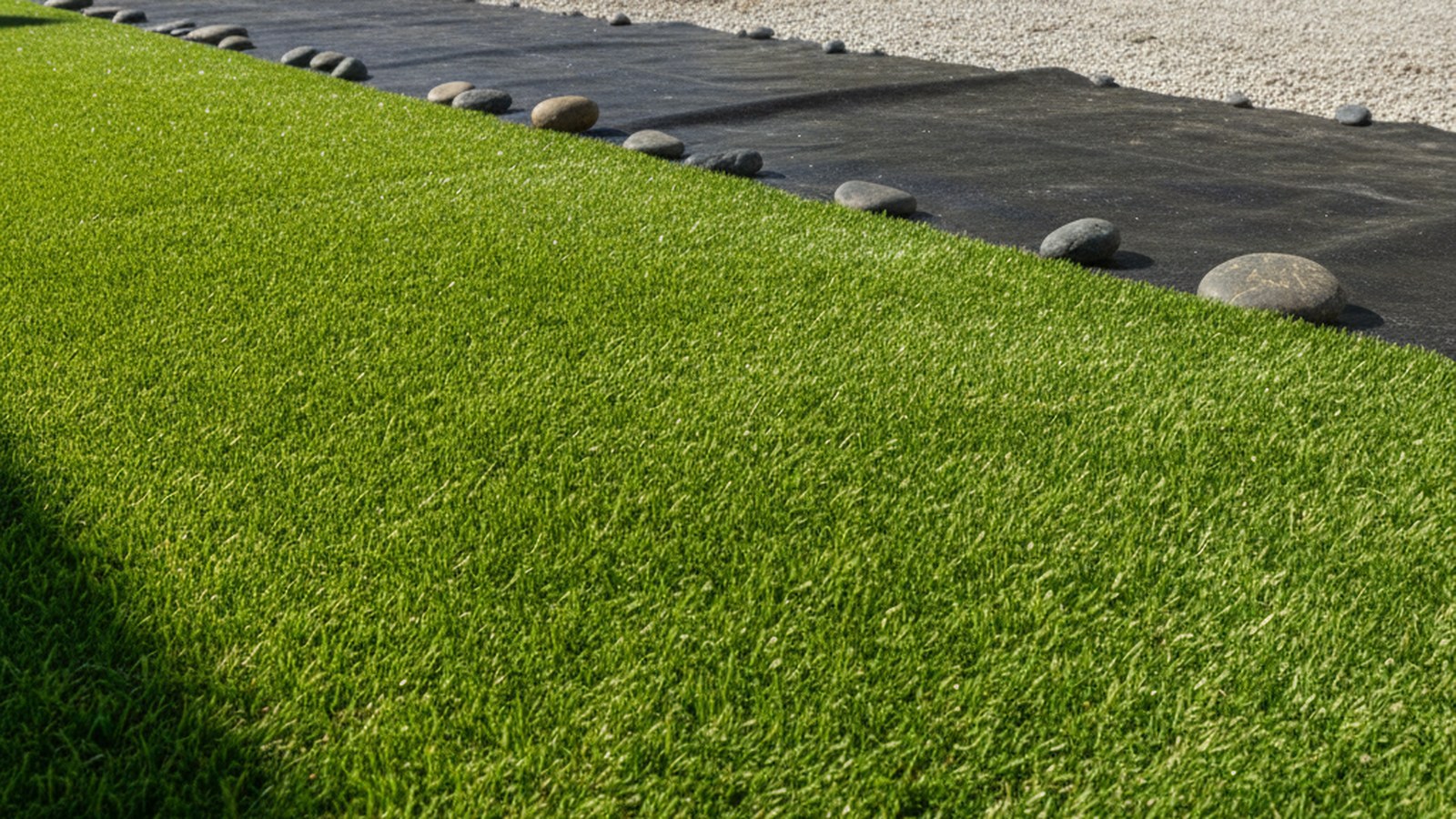
- Pin a weed membrane over the base, overlapping the seams.
- Roll the grass out and leave it an hour to relax.
- Cut to shape, join on tape, fix the perimeter.
- Brush in silica sand.
Tools and materials for a 50 m² lawn
| Item | Quantity |
|---|---|
| Crushed stone base | 3.5 m³ |
| Kiln-dried silica sand | 250 kg |
| Weed membrane | 55 m² |
| Seaming tape | 15 m |
| Galvanised pins | 120 |
Hire the plate compactor. Raking a base by hand leaves soft spots, and soft spots become hollows in the finished lawn.
Where DIY installations go wrong
- Uncompacted base. The lawn ripples in the first wet winter.
- Opposing pile direction. Two panels read as two colours.
- No infill. The pile flattens and the lawn creases.
- Membrane under the stone. It belongs above the base, not below it.
- Joins along the walking line. Move joins away from where people walk.
A guarantee only covers workmanship where the workmanship is ours. Our 8-year cover applies to lawns we install — see how we install, or get a fitted price for your garden.
Laying questions
Can I lay artificial grass myself?
Yes, on a small flat area over an existing hard surface. A lawn over soil needs the base excavated, compacted and levelled, and a plate compactor is hired equipment. Most DIY failures trace back to a base that was raked rather than compacted.
How deep must the base be?
The base runs 50 to 100mm after compaction. Sandy ground takes the shallow end. Clay takes the deep end because it holds water and moves.
Which way should the pile face?
Lay every panel with the pile leaning the same way, and point that lean toward the main viewing point. Panels laid in opposing directions read as two different colours in daylight.
Is laying astro turf any different?
No. Astro turf is laid exactly the same way, because it is the same product under an older brand name. The base, the membrane, the joins and the infill do not change.
How much sand infill does artificial grass need?
Artificial grass takes roughly 5 kilograms of kiln-dried silica sand per square metre. The sand weights the lawn, holds the blades upright and keeps the backing cooler.